Regional Variations in Enforcement Practices Shaping Access to Digital Card Games Across Austrian Provinces
Drew Foster · Nov 8, 2026
Regional Variations in Enforcement Practices Shaping Access to Digital Card Games Across Austrian Provinces
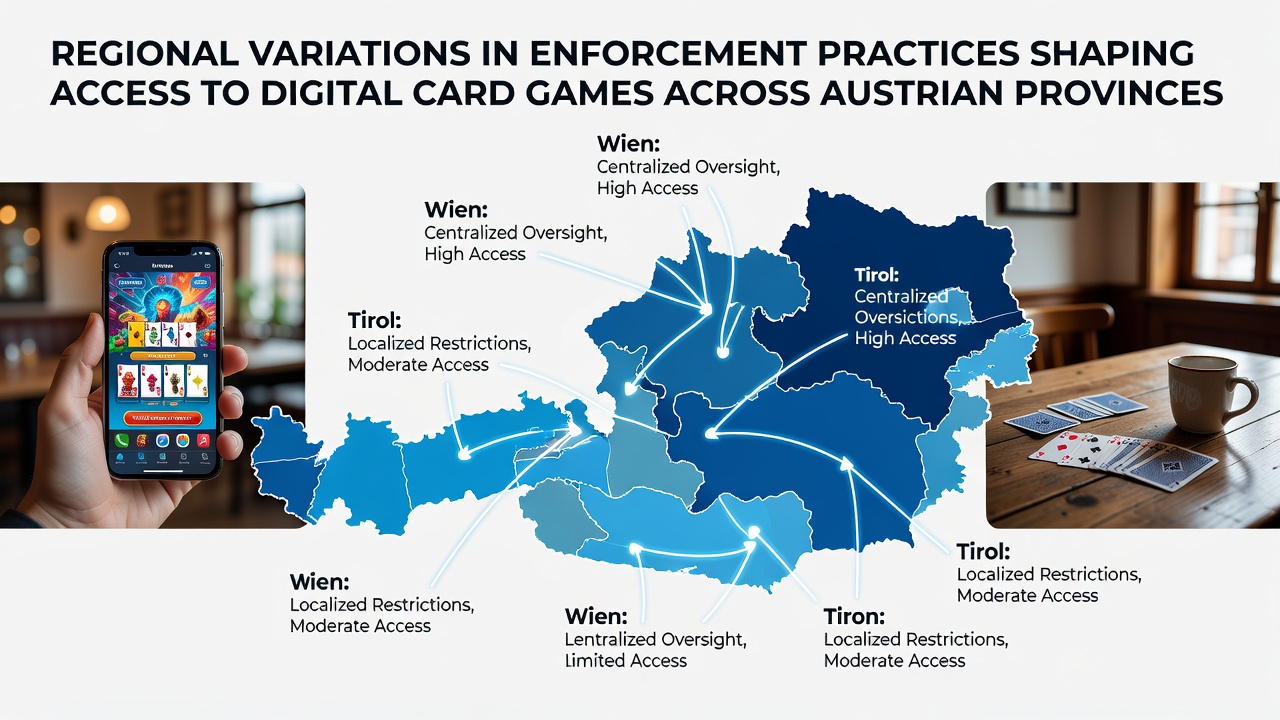
Austrian gambling regulations operate under a federal framework that leaves room for provincial authorities to interpret and apply enforcement measures differently, and this produces noticeable differences in how residents access digital card games such as online poker and blackjack platforms.
Federal Structure Meets Provincial Discretion
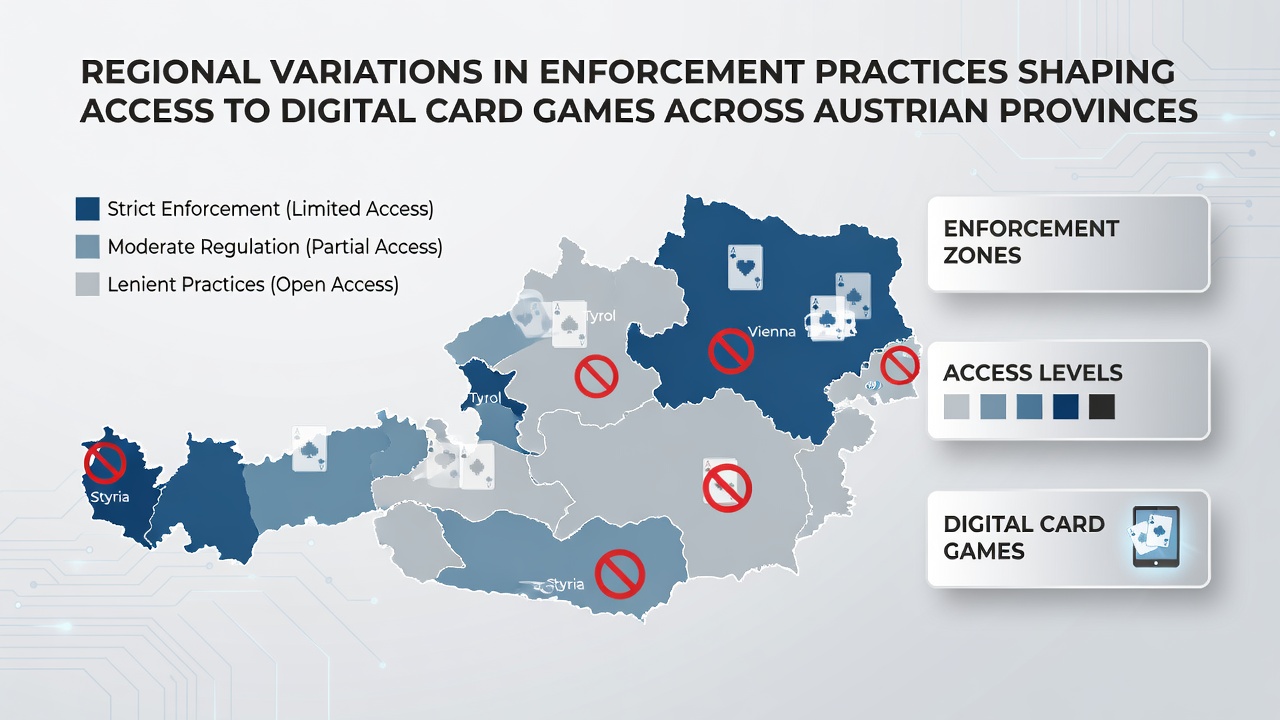
The Austrian Glücksspielgesetz establishes nationwide rules on licensing and operator obligations, yet each of the nine Länder maintains its own administrative bodies responsible for monitoring compliance and imposing sanctions when operators or players cross certain lines, and observers note that these bodies apply varying levels of scrutiny depending on local priorities and resources.
Vienna tends to coordinate closely with federal agencies on blocking orders and financial tracking, while provinces like Tyrol and Vorarlberg have historically focused enforcement resources on physical venues before extending oversight to digital channels, and data from 2025 shows that blocking lists maintained at the provincial level sometimes lag or advance ahead of the federal registry by several months.
Enforcement Patterns in Major Provinces
Lower Austria and Upper Austria apply a risk-based approach that targets payment processors first, requiring local banks to flag transactions linked to unlicensed digital card rooms, whereas Burgenland and Carinthia direct attention toward individual user activity through cooperation agreements with internet service providers, and these differences create uneven availability of the same platforms depending on where a player connects from.
Researchers at the University of Innsbruck documented in a 2025 report that connection success rates for international poker sites dropped by 18 percent in Salzburg after new filtering rules took effect in early 2026, while Styria recorded only a 6 percent decline over the same period because its enforcement relied more on operator warnings than on technical blocks.
And here's where regional differences become concrete: players in western provinces often report stable access to EU-licensed operators, while eastern provinces see more frequent temporary outages that last until operators adjust their routing or payment methods.
Impact on Player Access and Platform Strategies
Operators respond to these variations by maintaining separate compliance teams for each province and adjusting marketing spend accordingly, with some platforms geo-blocking specific Austrian IP ranges entirely while others maintain lighter restrictions that allow play but limit certain bonus features, and this patchwork forces users to navigate different terms depending on their registered address.
Figures released by the Austrian Federal Ministry of Finance in November 2026 indicated that license applications for digital card game operators rose 12 percent year-over-year, yet approvals clustered heavily in provinces with clearer enforcement guidelines, leaving applicants uncertain about timelines in regions where administrative practices remain less documented.
Those who study cross-border player behavior note that many Austrian users now maintain accounts with multiple operators and switch based on current enforcement signals, a pattern confirmed by transaction data shared through industry associations in neighboring EU member states.
Recent Developments Through Late 2026
By November 2026 several provinces had begun piloting shared monitoring dashboards that allow real-time exchange of enforcement actions, and early results suggest reduced duplication of efforts while still preserving local decision-making authority, although full integration across all nine Länder is not expected before 2028.
European Commission reports on digital single market implementation highlight Austria as an example where federalism creates both challenges and opportunities for consistent consumer protection standards in online gambling, with data indicating that provinces investing in automated detection tools achieve faster identification of unlicensed sites compared wth those relying on manual reviews.
Conclusion
Regional variations in enforcement continue to shape which digital card games remain reliably accessible to Austrian players, and the differences across provinces produce measurable effects on connection stability, payment processing, and operator behavior, with ongoing coordination efforts likely to narrow but not eliminate these disparities in the years ahead.